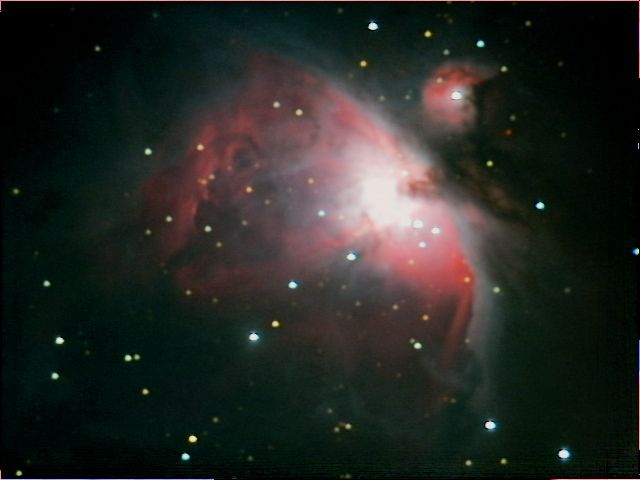
Orion Nebula M42 80x10s 13.3min 9xDark
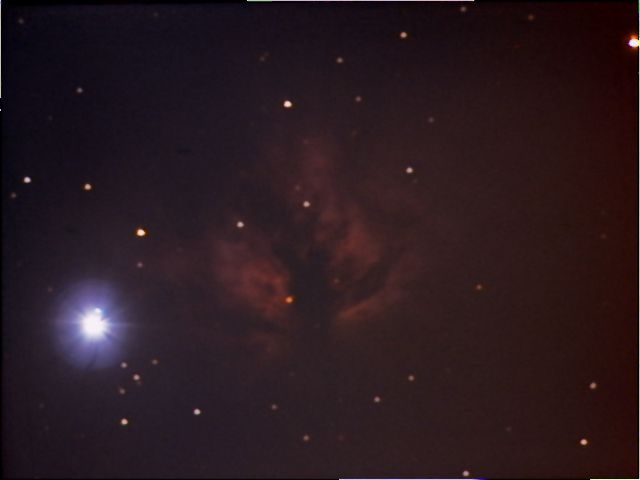
Flame Nebula 135x10s 22.5min No Dark
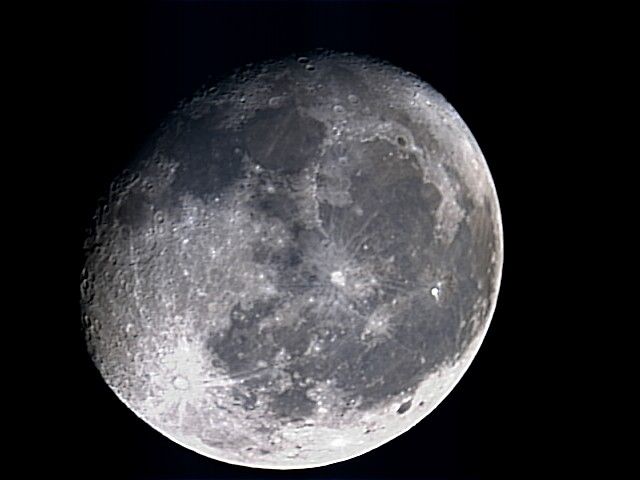
Moon 747 Stacked Frames in Registax
Equipment lists:
Celestron C6 SGT/SCT
Nexstar SLT Mount
Hyperstar Lens FL290mm f1.9
Baader Neodymium Filter
SPC900NC LX/Amp off
Stacked with DSS
It was a very clear night but very cold as well. The moon was 90% illuminated as shown above. The hyperstar collimation was brought to the default position; screwed down all the way back. It seems to be rather acceptably collimated with the default. The moon looks good. The starts in the nebulae photos looks okay as well.
There seems to a problem with the dark frame calibration this time. A total of 29 dark frames from a group of 9 and 20 frames were taken but if all of them were used for calibration, vertical streak would appear on the images. So, only 9 dark frames were used for calibration on Orion Nebula while none for Flame Nebula. Some forum suggested that the streaky image is a result of mismatch dark frames, i.e different temperature between the light and dark frames. This is very much possible as light/dark frame are taken at different time, sometimes at 20-30 minutes apart. Some suggested not to use dark frame. Even without calibration using dark frame, there seems not that much noise after all except for one or two visible hot pixels. The frame capture sequence is as follow, Orion, Dark 9, Orion, Dark 20, Flame.
It was a very clear night but very cold as well. The moon was 90% illuminated as shown above. The hyperstar collimation was brought to the default position; screwed down all the way back. It seems to be rather acceptably collimated with the default. The moon looks good. The starts in the nebulae photos looks okay as well.
There seems to a problem with the dark frame calibration this time. A total of 29 dark frames from a group of 9 and 20 frames were taken but if all of them were used for calibration, vertical streak would appear on the images. So, only 9 dark frames were used for calibration on Orion Nebula while none for Flame Nebula. Some forum suggested that the streaky image is a result of mismatch dark frames, i.e different temperature between the light and dark frames. This is very much possible as light/dark frame are taken at different time, sometimes at 20-30 minutes apart. Some suggested not to use dark frame. Even without calibration using dark frame, there seems not that much noise after all except for one or two visible hot pixels. The frame capture sequence is as follow, Orion, Dark 9, Orion, Dark 20, Flame.
